7 Store Layout Mistakes That Cost Luxury Brands Millions
Why Layout Is the Silent Revenue Driver
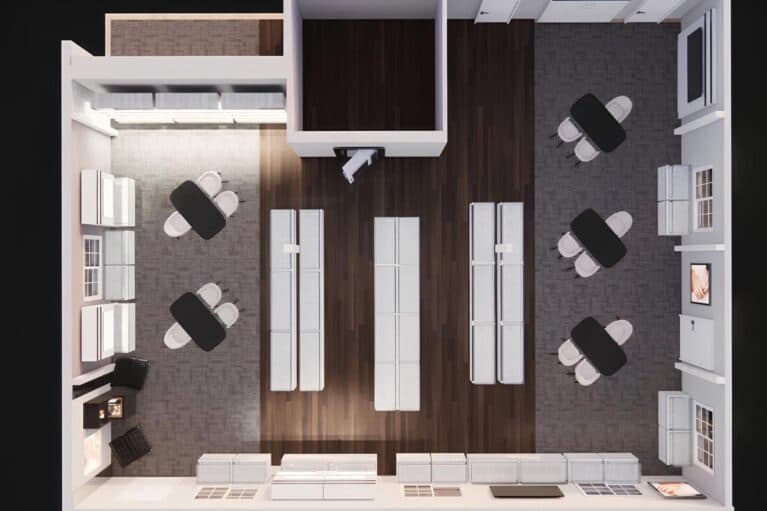
In luxury retail, the layout is not merely a floor plan — it is a choreography of emotion. Every sightline, threshold, and pause point is an opportunity to deepen engagement or, conversely, to lose a client. After designing over 200 luxury retail environments, we have identified seven recurring mistakes that consistently undermine performance.
The Seven Critical Errors
1. Overcrowding the Entrance Zone. The first three meters of a store are the decompression zone. Clients need a moment to adjust from the outside world. Placing product here creates visual noise rather than anticipation. Leave the entrance open, let the eye travel to a focal point deeper in the space.
2. Ignoring the Power Wall. The wall directly facing the entrance receives the most visual attention. Using it for storage or generic brand imagery wastes prime real estate. Reserve it for hero products or an immersive brand moment.
3. Uniform Lighting Throughout. A single lighting strategy flattens the experience. Luxury thrives on contrast: bright accent lighting on product, softer ambient tones in circulation areas, and dramatic focal points at key moments. Layer your light.
4. Blocking Sightlines to the Back. If clients cannot see what lies deeper in the store, most will not venture further. Maintain visual permeability with glass partitions, strategic openings, or lighting that draws the eye forward.
5. Neglecting Acoustic Design. Hard surfaces create echo and fatigue. Incorporate sound-absorbing materials — upholstered panels, thick curtains, or acoustic plaster — to create the hushed atmosphere that luxury clients expect.
6. Forgetting the Service Counter Experience. The point of purchase should feel like a celebration, not a checkout queue. Integrate the service counter into the design as a beautiful piece of furniture, not an afterthought counter at the back.
7. Static Displays That Never Change. Returning clients notice when nothing has changed. Design flexible display systems that allow easy rotation of product and visual merchandising elements.