5 Luxury Retail Design Trends Shaping 2024 and Beyond
The Future of Luxury Retail Is Being Built Today
The luxury retail landscape is undergoing a quiet revolution. As digital commerce matures, physical stores are no longer just points of sale — they are brand temples, community hubs, and experiential destinations. In 2024, design studios and brand architects are converging around five key trends that will shape the next decade of high-end retail.
1. Biophilic Materiality
Natural stone, live-edge timber, and integrated greenery are replacing the sterile white-box aesthetic that dominated luxury retail for years. Clients want to feel connected to nature, and designers are responding with travertine feature walls, moss installations, and skylights that invite genuine daylight into the shopping experience. The goal is warmth and authenticity — materials that age gracefully rather than look clinical.
2. Sensory Orchestration
Leading brands now treat scent, sound, and temperature as integral design elements rather than afterthoughts. A flagship store in Paris might diffuse a bespoke fragrance through its HVAC system, calibrate ambient music to shift from morning energy to evening intimacy, and adjust lighting color temperature across the day. This multi-sensory approach transforms a visit into a memorable encounter that cannot be replicated online.
3. The Private Client Suite
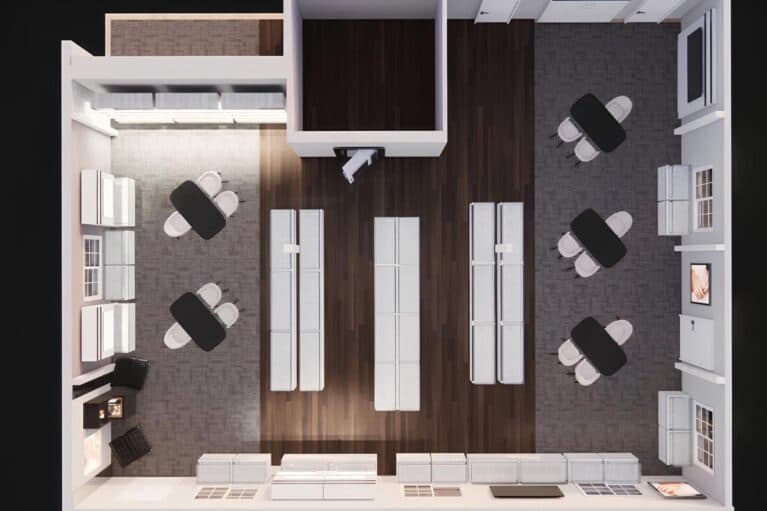
High-net-worth clients increasingly expect privacy. The response is a new typology within the store: a self-contained suite with its own entrance, concierge, refreshment bar, and dedicated display cases. These suites often feature residential-grade finishes — plush carpeting, bespoke furniture, curated art — blurring the line between a store and a private salon.
4. Digital-Physical Fusion
Interactive screens, NFC-enabled vitrines, and augmented-reality mirrors are quietly entering luxury spaces. The key is subtlety: technology should enhance the product story without overwhelming the aesthetic. Think a discreet screen embedded in a display case that reveals a watch’s provenance when a client leans in, not a glowing LED wall.
5. Adaptive Modularity
Brands are designing stores that can reconfigure for product launches, seasonal campaigns, and private events. Movable wall panels, modular display units, and flexible lighting tracks allow a single space to serve multiple functions throughout the year, maximizing return on investment while keeping the experience fresh.